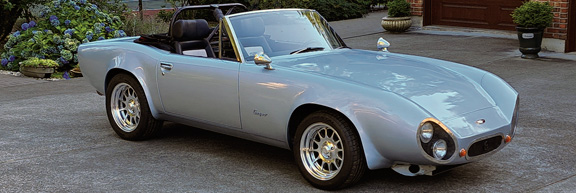
The Marvelous 907/912 and 250 Horsepower
The 907 engine was Lotus’s first in‑house design after years of relying on outside suppliers such as Coventry Climax and Ford of England. It debuted in the Jensen‑Healey in 1972 as a 140 hp 2.0L four‑valve, and Jensen purchased more than 10,000 engines between 1972 and 1976. The 907 powered Jensen‑Healeys to National Championships in multiple SCCA classes.
Beyond its success with Jensen, the 907 also served as the foundation for Lotus road cars through 1996 and powered the Sunbeam Talbot Lotus rally car, which won the World Rally Championship in 1981.
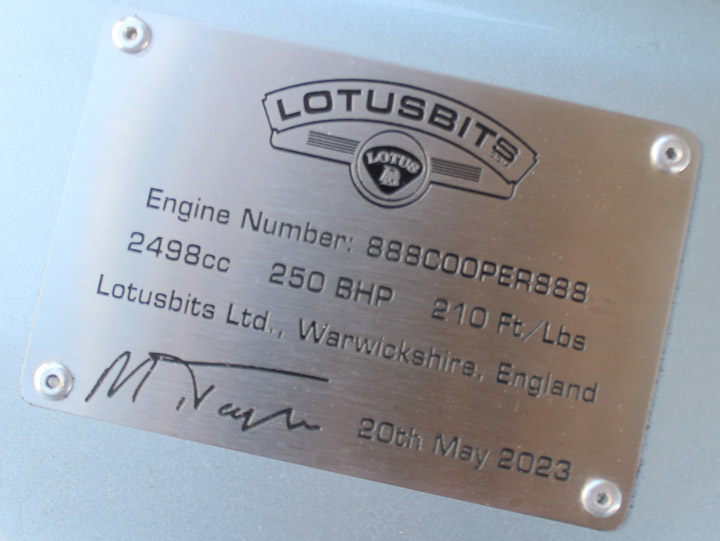
My Lotus 907 slant‑4 engine is 2498cc with 4‑valve/cyl head (907 head with 912 block) from Lotusbits. Bore 95.2mm × stroke 87.5mm, 250 bhp @ 7000 rpm & 210 ft‑lbs torque from 5100–6000 rpm and an 8000 rpm redline. Aluminum block and heads.
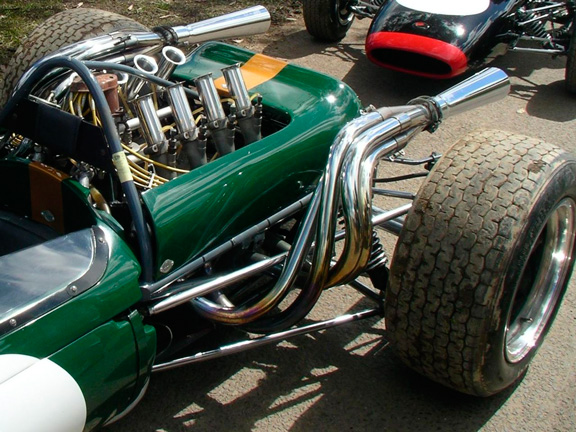
The 907 engine only weighs 292 lbs compared to 325 lbs for a less powerful Honda S2000 engine and 30 lbs less than the Buick‑Oldsmobile OHV 3.5L — a popular engine swap for various cars at the time. With a 3.0‑liter SOHC conversion this engine even won two Formula One World Championships for Jack Brabham in 1966 and 1967.
What My 907/912 Contains
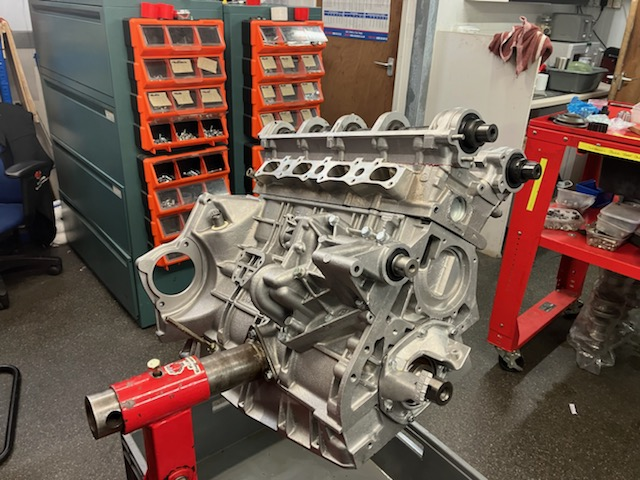
Lotusbits in the UK started with an EN40B billet nitrided crankshaft with counterweights and matched pistons. Forged lightweight pistons with small pins and lightweight steel connecting rods. Stainless‑steel 1.75” ceramic‑coated headers and custom stainless‑steel free‑flow dual exhaust system. Custom aluminum 4‑row radiator with electric cooling fan. Electronic fuel injection with Jenvey DCOE Heritage Throttle Bodies (they look like Weber carburetors — cool). Compression ratio 11:1 (runs on 92‑octane pump fuel). Cylinder head combustion chambers cc’d to equal size. Stainless‑steel valves. 80‑amp 8000‑rpm alternator. Heavy‑duty starter for the 11:1 compression. Vacuum storage canister for the brake booster. Heavy‑duty battery moved to trunk for better weight distribution. Engine oil cooler. Lightweight billet flywheel.
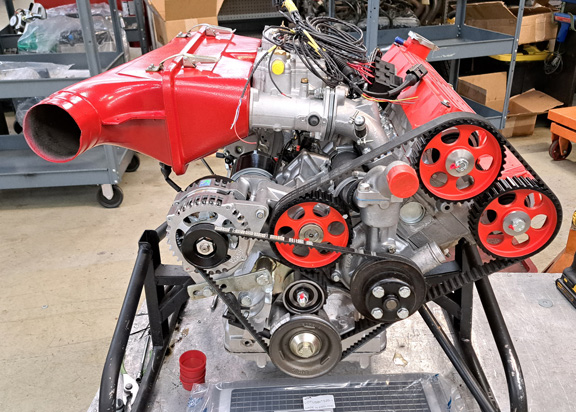
The Lotusbits engine weighs a little bit more than a stock 907 — among other factors the crankshaft is 4 lbs heavier but much better balanced, which is why the redline is 8000 rpm instead of 7000 rpm.
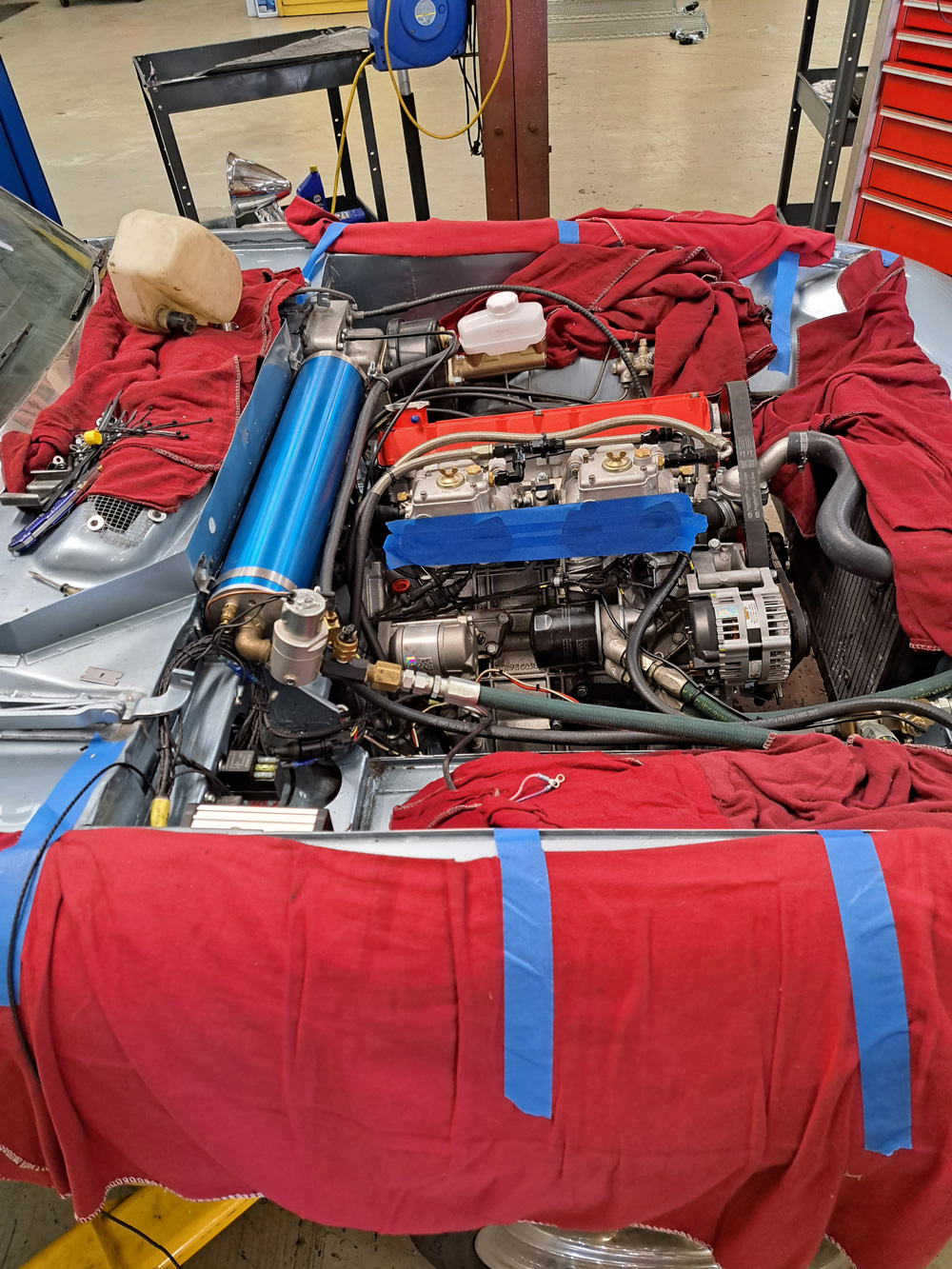
Lotusbits can build more powerful 907 engines (over 300 hp) but they are really for high‑rpm rally racing engines, not high‑torque street motors. For some reason I had no interest in a turbocharged engine; it must have been my drive for simplicity and my fear of complexity. I also disliked the idea of turbo throttle lag.
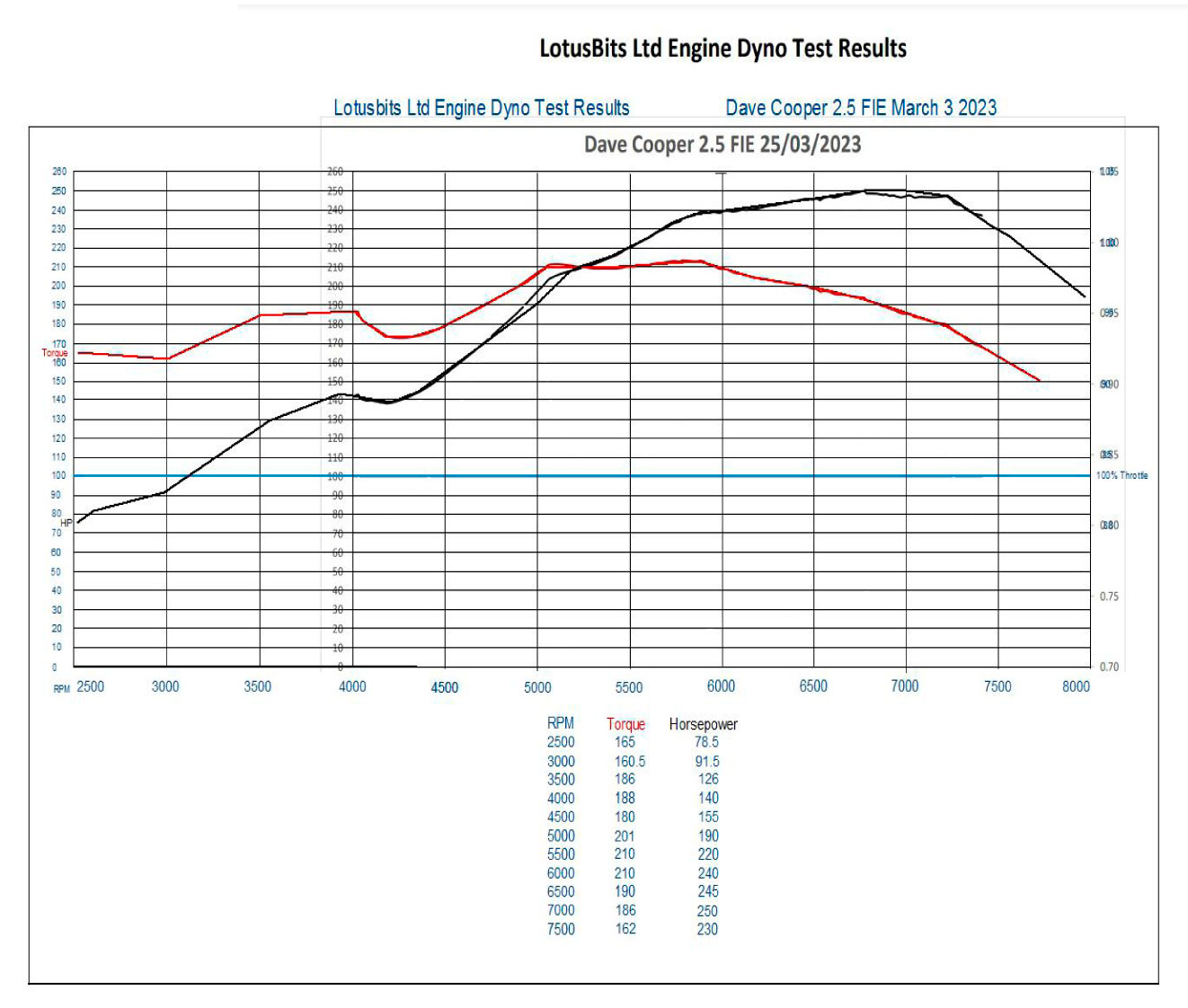
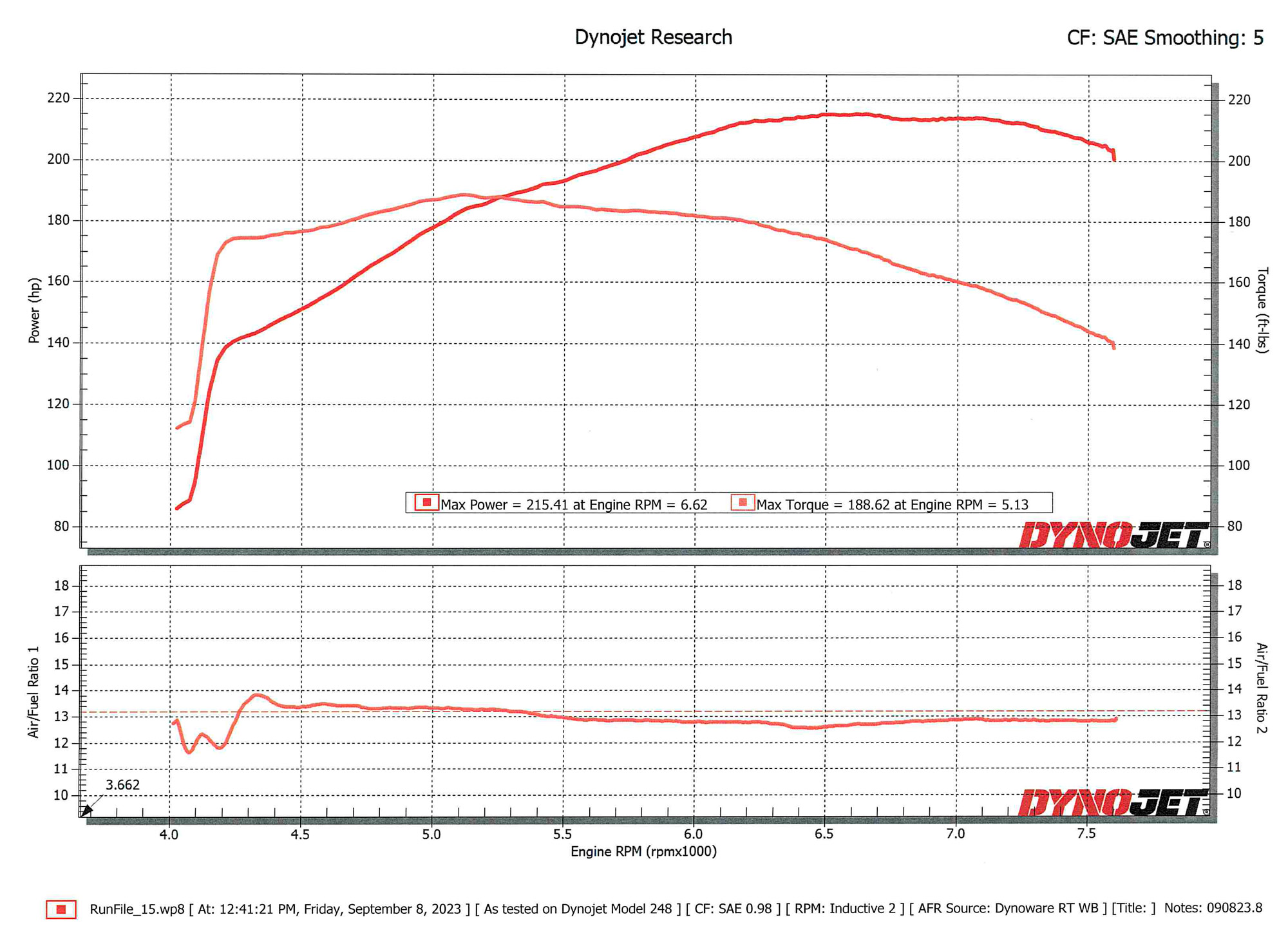
After the engine was installed, it was further tuned on the VRM chassis dyno (just below, click for larger version).
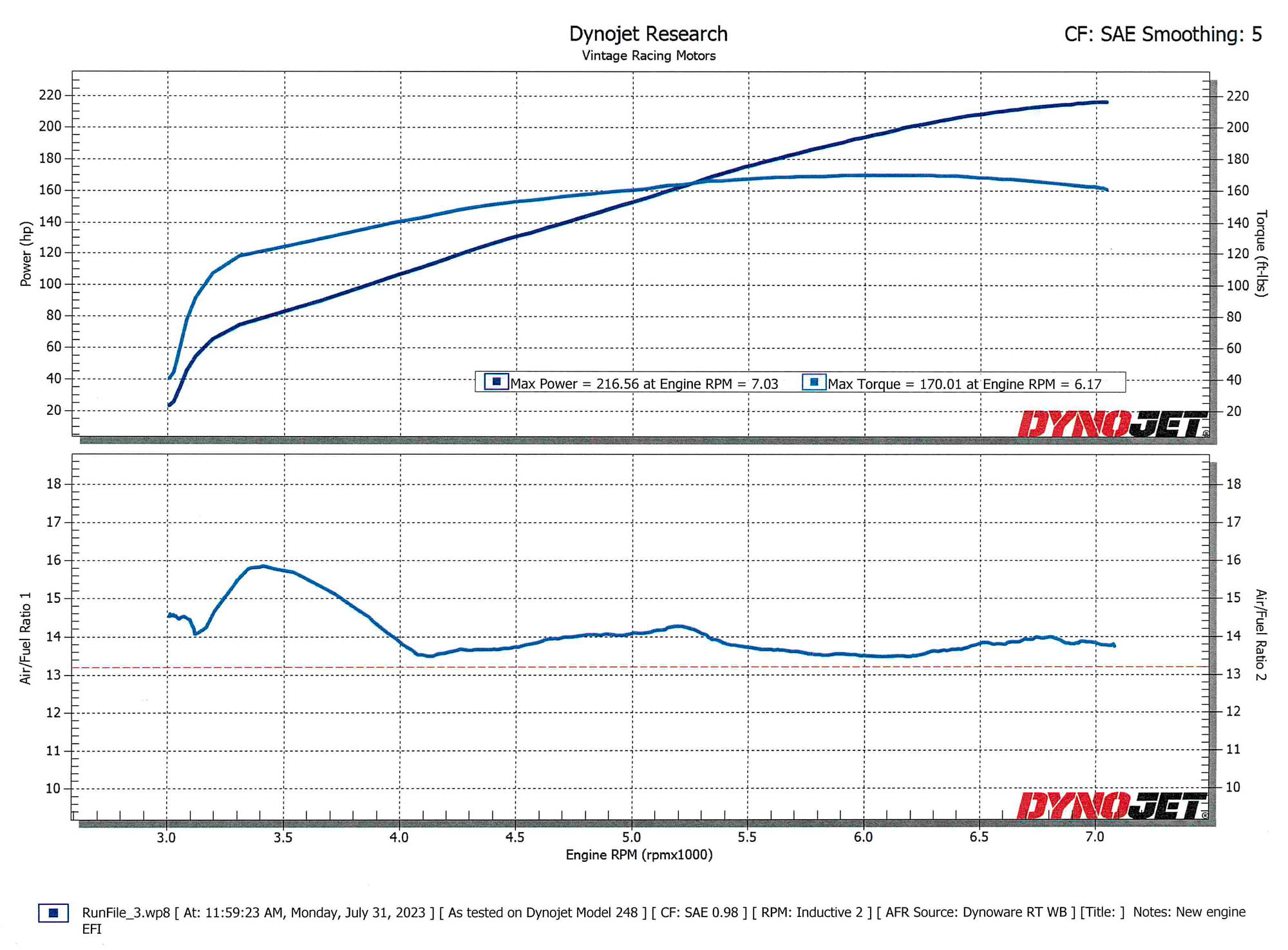
Second and final run at VRM (click for larger version) and with further tuning picked up 10% torque over the first run.

Back To Top